

Article Sidebar
Main Article Content
Abstract
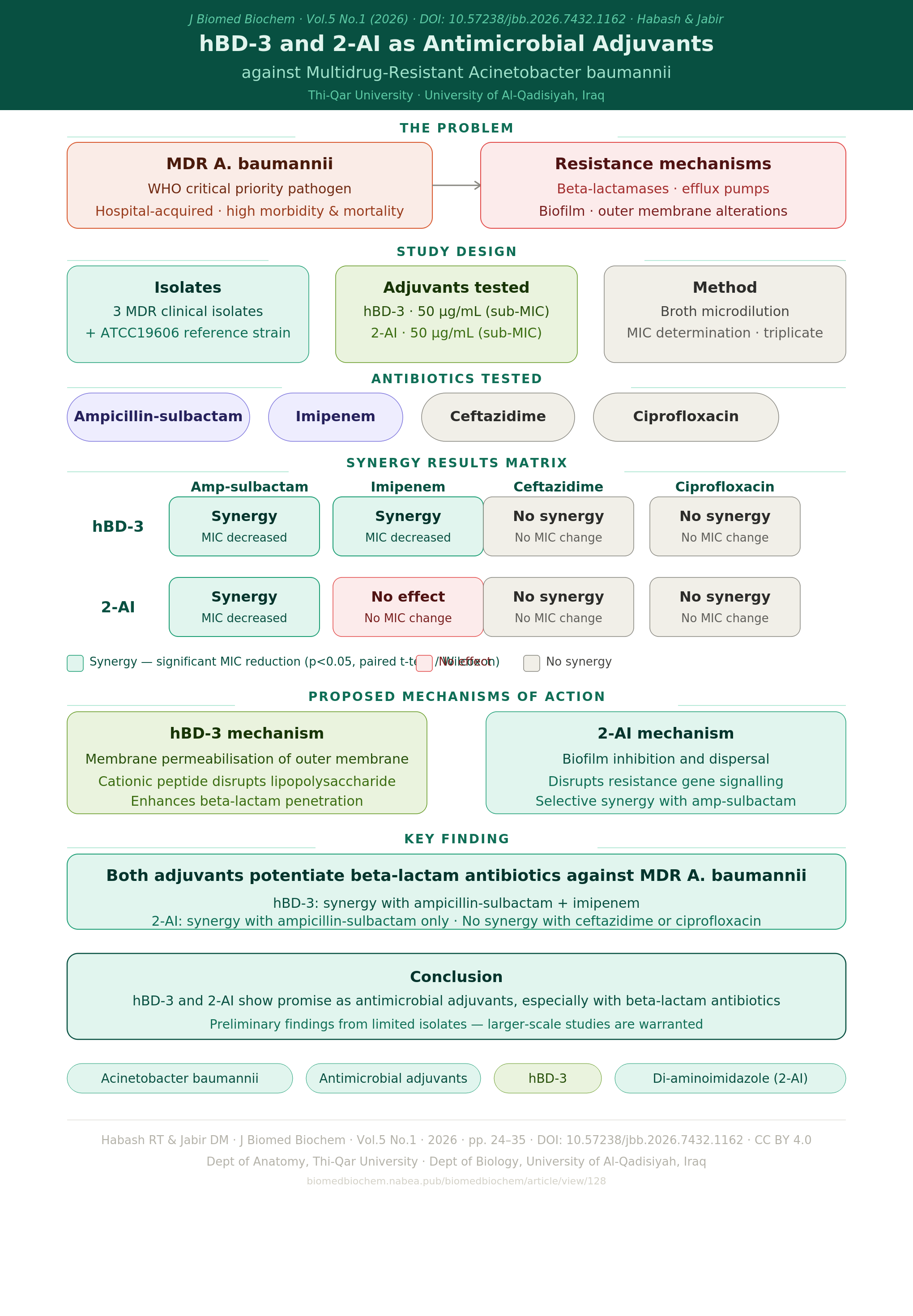
Background: Multidrug-resistant (MDR) Acinetobacter baumannii is a major cause of hospital-acquired infections with high morbidity and mortality. Resistance has quickly grown, making it harder to find effective treatments. This has led to the need for new approaches, like antimicrobial adjuvants that make existing antibiotics work better.
Objective: This study assessed the efficacy of human beta-defensin-3 (hBD-3) and di-aminoimidazole (2-AI) as antimicrobial adjuvants in conjunction with conventional antibiotics against multidrug-resistant A. baumannii.
Methods: We evaluated three MDR clinical isolates and one reference strain (ATCC19606). Used broth microdilution to find the minimum inhibitory concentrations (MICs) of hBD-3, 2-AI, and four antibiotics: ampicillin-sulbactam, imipenem, ceftazidime, and ciprofloxacin. A sub-MIC quantity of 50 µg/mL of hBD-3 and 2-AI was employed in combinatorial experiments. Experiments three times and used the paired t-test and Wilcoxon signed-rank test to look at the results.
Results: A notable decrease in MIC occurred when ampicillin-sulbactam was administered in conjunction with either hBD-3 or 2-AI across all isolates. There was also a big improvement with imipenem+ hBD-3, however imipenem + 2-AI had no impact. No substantial synergy was seen for combinations of ceftazidime or ciprofloxacin with either adjuvant.
Conclusion:hBD-3 and 2-AI showed potential, as antimicrobial adjuvants, especially; when combined with β-lactam antibiotics. However, due to the limited number of isolates examined, these findings must be considered preliminary, and further studies with larger sample sizes are required.
Keywords
Article Details
Copyright (c) 2026 Ruqayah Taher Habash, Dhuha Mahdi Jabir (Author)

This work is licensed under a Creative Commons Attribution 4.0 International License.
How to Cite


References
- Saadulla SOK, Muhammed SM. Detection of biofilm-related genes and antibiotic resistance in Acinetobacter baumannii isolated from clinical specimens. Biodiversitas. 2023;24(3):1412-1419. doi:https://doi.org/10.13057/biodiv/d240320.
- Wong D, Nielsen TB, Bonomo RA, Pantapalangkoor P, Luna B, Spellberg B. Clinical and pathophysiological overview of Acinetobacter infections. Clin Microbiol Rev. 2017;30(1):409-447. doi: https://doi.org/10.1128/CMR.00058-16.
- Shelenkov A, Mikhaylova Y, Yanushevich Y, Samoilov A, Petrova L, Fomina V, et al. Molecular typing, characterization of antimicrobial resistance, virulence profiling and whole-genome sequence analysis of clinical Klebsiella pneumoniae isolates. Antibiotics (Basel). 2020;9(5):261. doi: https://doi.org/10.3390/antibiotics9050261.
- Munier AL, Biard L, Legrand M, Rousseau C, Lafaurie M, Donay JL, et al. Incidence, risk factors and outcome of multidrug-resistant Acinetobacter baumannii nosocomial infections during an outbreak in a burn unit. Int J Infect Dis. 2019;79:179-184. doi: https://doi.org/10.1016/j.ijid.2018.11.367.
- Boyd SE, Livermore DM, Hooper DC, Hope WW. Metallo-β-lactamases: structure, function, epidemiology, treatment options, and the development pipeline. Antimicrob Agents Chemother. 2020;64(10):e00439-20. doi: https://doi.org/10.1128/AAC.00439-20.
- Yazdansetad S, Najari E, Ghaemi EA, et al. Carbapenem-resistant Acinetobacter baumannii isolates carrying blaOXA genes. J Glob Antimicrob Resist. 2019;18:95-99. doi: https://doi.org/10.1016/j.jgar.2019.01.008.
- Yasir M, Subahi AM, Shukri HA, Bibi F, Sohrab SS, Alawi M, et al. Bacterial community and genomic analysis of carbapenem-resistant Acinetobacter baumannii isolates from the environment of a healthcare facility. Pharmaceuticals (Basel). 2022;15(5):611. doi: https://doi.org/10.3390/ph15050611.
- Janbakhsh A, Khazaei S, Soroush A, Mirzaei S, Tarlan M, Tarlan S, et al. Antibiotic resistance in Acinetobacter strains isolated from patients, staff and equipment of ICU wards. Flora. 2020;271:151530. doi: https://doi.org/10.5812/jkums.100302.
- Zharkova MS, Orlov DS, Golubeva OY, et al. Application of antimicrobial peptides of the innate immune system in combination with conventional antibiotics. Front Cell Infect Microbiol. 2019;9:128. doi: https://doi.org/10.3389/fcimb.2019.00128.
- Rogers SA, Huigens RW 3rd, Cavanagh J, Melander C. Synergistic effects between conventional antibiotics and 2-aminoimidazole-derived antibiofilm agents. Antimicrob Agents Chemother. 2010;54(5):2112-2118. doi: https://doi.org/10.1128/aac.01418-09.
- Roy S, Chowdhury G, Mukhopadhyay AK, Dutta S, Basu S. Convergence of biofilm formation and antibiotic resistance in Acinetobacter baumannii infection. Front Med (Lausanne). 2022;9:793615. doi: https://doi.org/10.3389/fmed.2022.793615.
- Boll JM, Tucker AT, Klein DR, Beltran AM, Brodbelt JS, Davies BW, et al. Reinforcing lipid A acylation on the cell surface of Acinetobacter baumannii promotes cationic antimicrobial peptide resistance and desiccation survival. mBio. 2015;6(3):e00512-15. doi: https://doi.org/10.1128/mBio.00512-15.
- Mendes SG, Combo SI, Allain T, et al. Co-regulation of biofilm formation and antimicrobial resistance in Acinetobacter baumannii. Eur J Clin Microbiol Infect Dis. 2023;42(12):1405-1423. doi: https://doi.org/10.1007/s10096-023-04659-7.
- Tiku V, Kofoed EM, Yan D, et al. Outer membrane vesicles containing OmpA induce mitochondrial fragmentation to promote pathogenesis of Acinetobacter baumannii. Sci Rep. 2021;11(1):618. doi: https://doi.org/10.1038/s41598-020-79966-9.
- Belardinelli JM, Li W, Martin KH, Zeiler MJ, Lian E, Avanzi C, et al. 2-Aminoimidazoles inhibit Mycobacterium abscessus biofilms in a zinc-dependent manner. Int J Mol Sci. 2022;23(6):2950. doi: https://doi.org/10.3390/ijms23062950.
- Ardalani H, Anam S, Kromphardt KJ, Staerk D, Kongstad KT. Coupling microplate-based antibacterial assay with liquid chromatography for high-resolution growth inhibition profiling of crude extracts: validation and proof-of-concept study with Staphylococcus aureus. Molecules. 2021;26(6):1550. doi: https://doi.org/10.3390/molecules26061550.
References
Saadulla SOK, Muhammed SM. Detection of biofilm-related genes and antibiotic resistance in Acinetobacter baumannii isolated from clinical specimens. Biodiversitas. 2023;24(3):1412-1419. doi:https://doi.org/10.13057/biodiv/d240320.
Wong D, Nielsen TB, Bonomo RA, Pantapalangkoor P, Luna B, Spellberg B. Clinical and pathophysiological overview of Acinetobacter infections. Clin Microbiol Rev. 2017;30(1):409-447. doi: https://doi.org/10.1128/CMR.00058-16.
Shelenkov A, Mikhaylova Y, Yanushevich Y, Samoilov A, Petrova L, Fomina V, et al. Molecular typing, characterization of antimicrobial resistance, virulence profiling and whole-genome sequence analysis of clinical Klebsiella pneumoniae isolates. Antibiotics (Basel). 2020;9(5):261. doi: https://doi.org/10.3390/antibiotics9050261.
Munier AL, Biard L, Legrand M, Rousseau C, Lafaurie M, Donay JL, et al. Incidence, risk factors and outcome of multidrug-resistant Acinetobacter baumannii nosocomial infections during an outbreak in a burn unit. Int J Infect Dis. 2019;79:179-184. doi: https://doi.org/10.1016/j.ijid.2018.11.367.
Boyd SE, Livermore DM, Hooper DC, Hope WW. Metallo-β-lactamases: structure, function, epidemiology, treatment options, and the development pipeline. Antimicrob Agents Chemother. 2020;64(10):e00439-20. doi: https://doi.org/10.1128/AAC.00439-20.
Yazdansetad S, Najari E, Ghaemi EA, et al. Carbapenem-resistant Acinetobacter baumannii isolates carrying blaOXA genes. J Glob Antimicrob Resist. 2019;18:95-99. doi: https://doi.org/10.1016/j.jgar.2019.01.008.
Yasir M, Subahi AM, Shukri HA, Bibi F, Sohrab SS, Alawi M, et al. Bacterial community and genomic analysis of carbapenem-resistant Acinetobacter baumannii isolates from the environment of a healthcare facility. Pharmaceuticals (Basel). 2022;15(5):611. doi: https://doi.org/10.3390/ph15050611.
Janbakhsh A, Khazaei S, Soroush A, Mirzaei S, Tarlan M, Tarlan S, et al. Antibiotic resistance in Acinetobacter strains isolated from patients, staff and equipment of ICU wards. Flora. 2020;271:151530. doi: https://doi.org/10.5812/jkums.100302.
Zharkova MS, Orlov DS, Golubeva OY, et al. Application of antimicrobial peptides of the innate immune system in combination with conventional antibiotics. Front Cell Infect Microbiol. 2019;9:128. doi: https://doi.org/10.3389/fcimb.2019.00128.
Rogers SA, Huigens RW 3rd, Cavanagh J, Melander C. Synergistic effects between conventional antibiotics and 2-aminoimidazole-derived antibiofilm agents. Antimicrob Agents Chemother. 2010;54(5):2112-2118. doi: https://doi.org/10.1128/aac.01418-09.
Roy S, Chowdhury G, Mukhopadhyay AK, Dutta S, Basu S. Convergence of biofilm formation and antibiotic resistance in Acinetobacter baumannii infection. Front Med (Lausanne). 2022;9:793615. doi: https://doi.org/10.3389/fmed.2022.793615.
Boll JM, Tucker AT, Klein DR, Beltran AM, Brodbelt JS, Davies BW, et al. Reinforcing lipid A acylation on the cell surface of Acinetobacter baumannii promotes cationic antimicrobial peptide resistance and desiccation survival. mBio. 2015;6(3):e00512-15. doi: https://doi.org/10.1128/mBio.00512-15.
Mendes SG, Combo SI, Allain T, et al. Co-regulation of biofilm formation and antimicrobial resistance in Acinetobacter baumannii. Eur J Clin Microbiol Infect Dis. 2023;42(12):1405-1423. doi: https://doi.org/10.1007/s10096-023-04659-7.
Tiku V, Kofoed EM, Yan D, et al. Outer membrane vesicles containing OmpA induce mitochondrial fragmentation to promote pathogenesis of Acinetobacter baumannii. Sci Rep. 2021;11(1):618. doi: https://doi.org/10.1038/s41598-020-79966-9.
Belardinelli JM, Li W, Martin KH, Zeiler MJ, Lian E, Avanzi C, et al. 2-Aminoimidazoles inhibit Mycobacterium abscessus biofilms in a zinc-dependent manner. Int J Mol Sci. 2022;23(6):2950. doi: https://doi.org/10.3390/ijms23062950.
Ardalani H, Anam S, Kromphardt KJ, Staerk D, Kongstad KT. Coupling microplate-based antibacterial assay with liquid chromatography for high-resolution growth inhibition profiling of crude extracts: validation and proof-of-concept study with Staphylococcus aureus. Molecules. 2021;26(6):1550. doi: https://doi.org/10.3390/molecules26061550.