

Article Sidebar
Main Article Content
Abstract
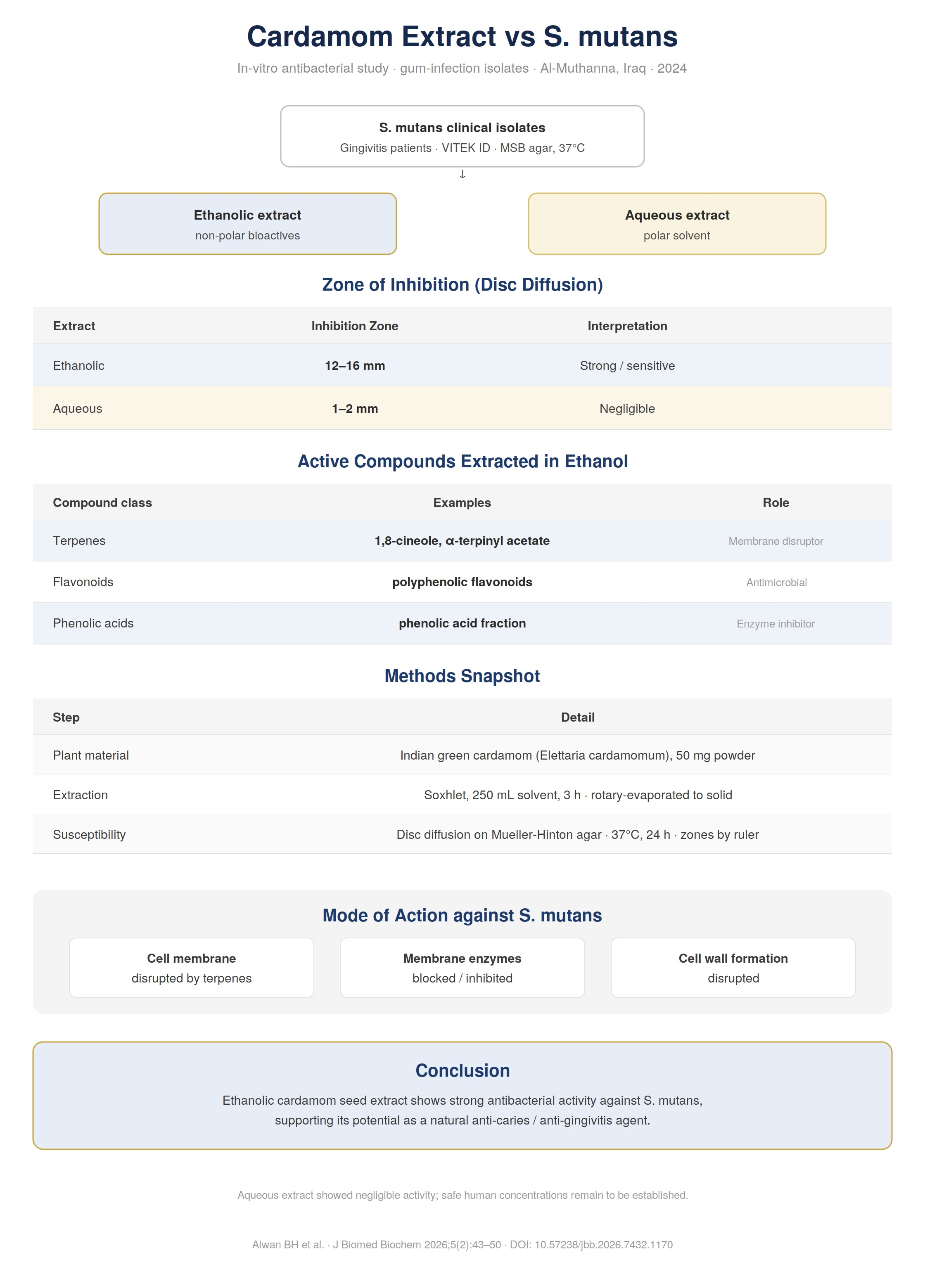
Background: S. mutans is one of the most bacterial pathogens causing periodontal disease worldwide. Aim: This study aimed to evaluate the effectiveness of cardamom seed extract concentrations in inhibiting the growth of clinically isolated bacteria from patients with gingivitis caused by Streptococcus mutans, given the traditional use of cardamom seeds in Iraqi folk medicine for oral and dental health.
Methods: S. mutans bacteria were clinically isolated from patients with periodontal disease in Al-Muthanna Governorate and identified using the VITEK system. The effect of cardamom seed extracts on the bacterial growth activity of Streptococcus mutans was then evaluated.
Results: The study showed that ethanolic extracts of cardamom seeds (Elettaria cardamomum) have strong antibacterial effects against Streptococcus mutans (S. mutans), and the larger inhibition zones (12-16 mm) observed in the ethanolic extract indicate better efficacy than the aqueous extract.
Conclusion: The properties of ethanolic cardamom extract have demonstrated its ability to inhibit bacterial cell membrane enzymes, thus controlling bacteria. Furthermore, it is necessary to determine safe concentrations for human use and assess their suitability for use without the appearance of side effects.
Keywords
Article Details
Copyright (c) 2026 Bushra Hussein Alwan, Aseel Talib Hashem, Hadeel S. Almaliki, Yousif Sinan Alhamadani, Haider S. Almnehlawi, Anfal AL-Dalaeen, Nawar Jasim Alsalih, Ali Mosa Rashid Al-Yasari, Mohenned Alsaadawi (Author)

This work is licensed under a Creative Commons Attribution 4.0 International License.
How to Cite


References
- Yang J, Wang S, Luo X, Yu Z, Zhou Y. Fenton-like process in antibiotic-containing wastewater treatment: applications and toxicity evaluation. Chin Chem Lett. 2025;110996. https://doi.org/10.1016/j.cclet.2025.110996
- Susin C, Stadler AF, Haas A, Albandar JM. Periodontal manifestations of systemic diseases. J Periodontal Res. 2025;1–26. https://doi.org/10.1111/jre.70034
- Dye BA. Global periodontal disease epidemiology. Periodontol 2000. 2012;58(1):10–25. https://doi.org/10.1902/jop.2011.110320
- Cafiero C, Matarasso S. Predictive, preventive, personalised and participatory periodontology: the 5Ps age has already started. EPMA J. 2013;4:16. https://doi.org/10.1186/1878-5085-4-16
- Lamont RJ, Jenkinson HF. Oral Microbiology at a Glance. Singapore: Wiley Blackwell; 2010. https://doi.org/10.1002/9781444325556
- Rogers AH. Molecular Oral Microbiology. Norfolk: Caister Academic Press; 2008.
- Liang HJ, Tan XY, Li D, Lin C, Huang SY, Nie GC, et al. New advances in oral microbiology and tumor research. World J Clin Oncol. 2025;16(7):106981. https://doi.org/10.5306/wjco.v16.i7.106981
- Bjarnsholt T, Buhlin K, Dufrêne YF, Gomelsky M, Moroni A, Ramstedt M, et al. Biofilm formation – what we can learn from recent developments. J Intern Med. 2018;284(4):332–345. https://doi.org/10.1111/joim.12782
- de Sousa Araújo TA, Gomes de Melo J, Soares Ferreira Júnior W, Paulino Albuquerque U. Medicinal plants. In: Introduction to Ethnobiology. Cham: Springer; 2016. p. 143–149. https://doi.org/10.1007/978-3-319-28155-1_23
- Azmir J, Zaidul ISM, Rahman MM, Sharif KM, Mohamed A, Sahena F, et al. Techniques for extraction of bioactive compounds from plant materials: a review. J Food Eng. 2013;117(4):426–436. https://doi.org/10.1016/j.jfoodeng.2013.01.014
- Nambiar R, Raveendran K. Indigenous medicinal plants scripted in Amarakosam. Am J Bot. 2008;1(3):68–72.
- Grieve M. Cardamons botanical: Elettaria cardamomum Maton – a modern herbal. Ind J. 2006;1–4.
- Christman S. Flavidata: Elettaria cardamomum [Internet]. Tallahassee: Flavide; 2006 [cited 2025]. Available from: www.flavidata.com
- Bansal K, Shamoo A, Atif M, Batra P, Chaudhry R. Isolation and detection of bacterial species on mitis salivarius bacitracin agar from the plaque samples of caries active children. J Indian Soc Pedod Prev Dent. 2024;42(1):15–21. https://doi.org/10.4103/jisppd.jisppd_17_24
- McFadden LRM. Antimicrobial assay of sagebrush roots [thesis]. 2022. https://doi.org/10.26076/ae7e-09c8
- Karagöz A, Acar S, Körkoca H. Characterization of Klebsiella isolates by MALDI-TOF MS and determination of antimicrobial resistance with VITEK 2 advanced expert system. Turk J Med Sci. 2015;45(6):1335–1344. https://doi.org/10.3906/sag-1407-31
- Hardie JM, Whiley RA. The genus Streptococcus – oral. In: The Prokaryotes. Vol. 4. New York: Springer; 2006. p. 76–107. https://doi.org/10.1007/0-387-30744-3_4
- Sekar SKV, Dalla Mora A, Bargigia I, Martinenghi E, Lindner C, Farzam P, et al. Broadband (600–1350 nm) time-resolved diffuse optical spectrometer for clinical use. IEEE J Sel Top Quantum Electron. 2015;22(3):406–414. https://doi.org/10.1109/JSTQE.2015.2506613
- Valm AM. The structure of dental plaque microbial communities in the transition from health to dental caries and periodontal disease. J Mol Biol. 2019;431(16):2957–2969. https://doi.org/10.1016/j.jmb.2019.05.016
- Marsh PD, Zaura E. Dental biofilm: ecological interactions in health and disease. J Clin Periodontol. 2017;44(S18):S12–S22. https://doi.org/10.1111/jcpe.12679
- Almatroudi A. Biofilm resilience: molecular mechanisms driving antibiotic resistance in clinical contexts. Biology. 2025;14(2):165. https://doi.org/10.3390/biology14020165
- Belibasakis GN, Belstrøm D, Eick S, Gursoy UK, Johansson A, Könönen E. Periodontal microbiology and microbial etiology of periodontal diseases: historical concepts and contemporary perspectives. Periodontol 2000. 2023;00:1–17. https://doi.org/10.1111/prd.12473
- Darveau RP. Periodontitis: a polymicrobial disruption of host homeostasis. Nat Rev Microbiol. 2010;8(7):481–490. https://doi.org/10.1038/nrmicro2337
- Bhatt P, et al. Phytochemistry and antimicrobial properties of cardamom. J Essent Oil Res. 2014;26(1):1–12. https://doi.org/10.1080/10412905.2013.860409
- Kaushik P, et al. Antimicrobial activity of cardamom essential oil. Food Chem. 2010;119(1):196–201. https://doi.org/10.1016/j.foodchem.2009.06.025
- Abdel-Rasoul AA, Saleh NA, Hosny EN, El-Gizawy MM, Ibrahim EA. Cardamom oil ameliorates behavioral and neuropathological disorders in a rat model of depression induced by reserpine. J Ethnopharmacol. 2023;308:116254. https://doi.org/10.1016/j.jep.2023.116254
- Lemos JA, et al. The biology of Streptococcus mutans. Microbiol Spectr. 2019;7(1). https://doi.org/10.1128/microbiolspec.GPP3-0051-2018
- Aghamiri V, et al. Antimicrobial activity of Elettaria cardamomum against oral pathogens. J Herbal Med. 2016;6(2):78–84. https://doi.org/10.1016/j.hermed.2016.02.001
- Huang W, Wang Y, Tian W, Cui X, Tu P, Li J, et al. Biosynthesis investigations of terpenoid, alkaloid, and flavonoid antimicrobial agents derived from medicinal plants. Antibiotics. 2022;11(10):1380. https://doi.org/10.3390/antibiotics11101380
References
Yang J, Wang S, Luo X, Yu Z, Zhou Y. Fenton-like process in antibiotic-containing wastewater treatment: applications and toxicity evaluation. Chin Chem Lett. 2025;110996. https://doi.org/10.1016/j.cclet.2025.110996
Susin C, Stadler AF, Haas A, Albandar JM. Periodontal manifestations of systemic diseases. J Periodontal Res. 2025;1–26. https://doi.org/10.1111/jre.70034
Dye BA. Global periodontal disease epidemiology. Periodontol 2000. 2012;58(1):10–25. https://doi.org/10.1902/jop.2011.110320
Cafiero C, Matarasso S. Predictive, preventive, personalised and participatory periodontology: the 5Ps age has already started. EPMA J. 2013;4:16. https://doi.org/10.1186/1878-5085-4-16
Lamont RJ, Jenkinson HF. Oral Microbiology at a Glance. Singapore: Wiley Blackwell; 2010. https://doi.org/10.1002/9781444325556
Rogers AH. Molecular Oral Microbiology. Norfolk: Caister Academic Press; 2008.
Liang HJ, Tan XY, Li D, Lin C, Huang SY, Nie GC, et al. New advances in oral microbiology and tumor research. World J Clin Oncol. 2025;16(7):106981. https://doi.org/10.5306/wjco.v16.i7.106981
Bjarnsholt T, Buhlin K, Dufrêne YF, Gomelsky M, Moroni A, Ramstedt M, et al. Biofilm formation – what we can learn from recent developments. J Intern Med. 2018;284(4):332–345. https://doi.org/10.1111/joim.12782
de Sousa Araújo TA, Gomes de Melo J, Soares Ferreira Júnior W, Paulino Albuquerque U. Medicinal plants. In: Introduction to Ethnobiology. Cham: Springer; 2016. p. 143–149. https://doi.org/10.1007/978-3-319-28155-1_23
Azmir J, Zaidul ISM, Rahman MM, Sharif KM, Mohamed A, Sahena F, et al. Techniques for extraction of bioactive compounds from plant materials: a review. J Food Eng. 2013;117(4):426–436. https://doi.org/10.1016/j.jfoodeng.2013.01.014
Nambiar R, Raveendran K. Indigenous medicinal plants scripted in Amarakosam. Am J Bot. 2008;1(3):68–72.
Grieve M. Cardamons botanical: Elettaria cardamomum Maton – a modern herbal. Ind J. 2006;1–4.
Christman S. Flavidata: Elettaria cardamomum [Internet]. Tallahassee: Flavide; 2006 [cited 2025]. Available from: www.flavidata.com
Bansal K, Shamoo A, Atif M, Batra P, Chaudhry R. Isolation and detection of bacterial species on mitis salivarius bacitracin agar from the plaque samples of caries active children. J Indian Soc Pedod Prev Dent. 2024;42(1):15–21. https://doi.org/10.4103/jisppd.jisppd_17_24
McFadden LRM. Antimicrobial assay of sagebrush roots [thesis]. 2022. https://doi.org/10.26076/ae7e-09c8
Karagöz A, Acar S, Körkoca H. Characterization of Klebsiella isolates by MALDI-TOF MS and determination of antimicrobial resistance with VITEK 2 advanced expert system. Turk J Med Sci. 2015;45(6):1335–1344. https://doi.org/10.3906/sag-1407-31
Hardie JM, Whiley RA. The genus Streptococcus – oral. In: The Prokaryotes. Vol. 4. New York: Springer; 2006. p. 76–107. https://doi.org/10.1007/0-387-30744-3_4
Sekar SKV, Dalla Mora A, Bargigia I, Martinenghi E, Lindner C, Farzam P, et al. Broadband (600–1350 nm) time-resolved diffuse optical spectrometer for clinical use. IEEE J Sel Top Quantum Electron. 2015;22(3):406–414. https://doi.org/10.1109/JSTQE.2015.2506613
Valm AM. The structure of dental plaque microbial communities in the transition from health to dental caries and periodontal disease. J Mol Biol. 2019;431(16):2957–2969. https://doi.org/10.1016/j.jmb.2019.05.016
Marsh PD, Zaura E. Dental biofilm: ecological interactions in health and disease. J Clin Periodontol. 2017;44(S18):S12–S22. https://doi.org/10.1111/jcpe.12679
Almatroudi A. Biofilm resilience: molecular mechanisms driving antibiotic resistance in clinical contexts. Biology. 2025;14(2):165. https://doi.org/10.3390/biology14020165
Belibasakis GN, Belstrøm D, Eick S, Gursoy UK, Johansson A, Könönen E. Periodontal microbiology and microbial etiology of periodontal diseases: historical concepts and contemporary perspectives. Periodontol 2000. 2023;00:1–17. https://doi.org/10.1111/prd.12473
Darveau RP. Periodontitis: a polymicrobial disruption of host homeostasis. Nat Rev Microbiol. 2010;8(7):481–490. https://doi.org/10.1038/nrmicro2337
Bhatt P, et al. Phytochemistry and antimicrobial properties of cardamom. J Essent Oil Res. 2014;26(1):1–12. https://doi.org/10.1080/10412905.2013.860409
Kaushik P, et al. Antimicrobial activity of cardamom essential oil. Food Chem. 2010;119(1):196–201. https://doi.org/10.1016/j.foodchem.2009.06.025
Abdel-Rasoul AA, Saleh NA, Hosny EN, El-Gizawy MM, Ibrahim EA. Cardamom oil ameliorates behavioral and neuropathological disorders in a rat model of depression induced by reserpine. J Ethnopharmacol. 2023;308:116254. https://doi.org/10.1016/j.jep.2023.116254
Lemos JA, et al. The biology of Streptococcus mutans. Microbiol Spectr. 2019;7(1). https://doi.org/10.1128/microbiolspec.GPP3-0051-2018
Aghamiri V, et al. Antimicrobial activity of Elettaria cardamomum against oral pathogens. J Herbal Med. 2016;6(2):78–84. https://doi.org/10.1016/j.hermed.2016.02.001
Huang W, Wang Y, Tian W, Cui X, Tu P, Li J, et al. Biosynthesis investigations of terpenoid, alkaloid, and flavonoid antimicrobial agents derived from medicinal plants. Antibiotics. 2022;11(10):1380. https://doi.org/10.3390/antibiotics11101380