

Article Sidebar
Main Article Content
Abstract
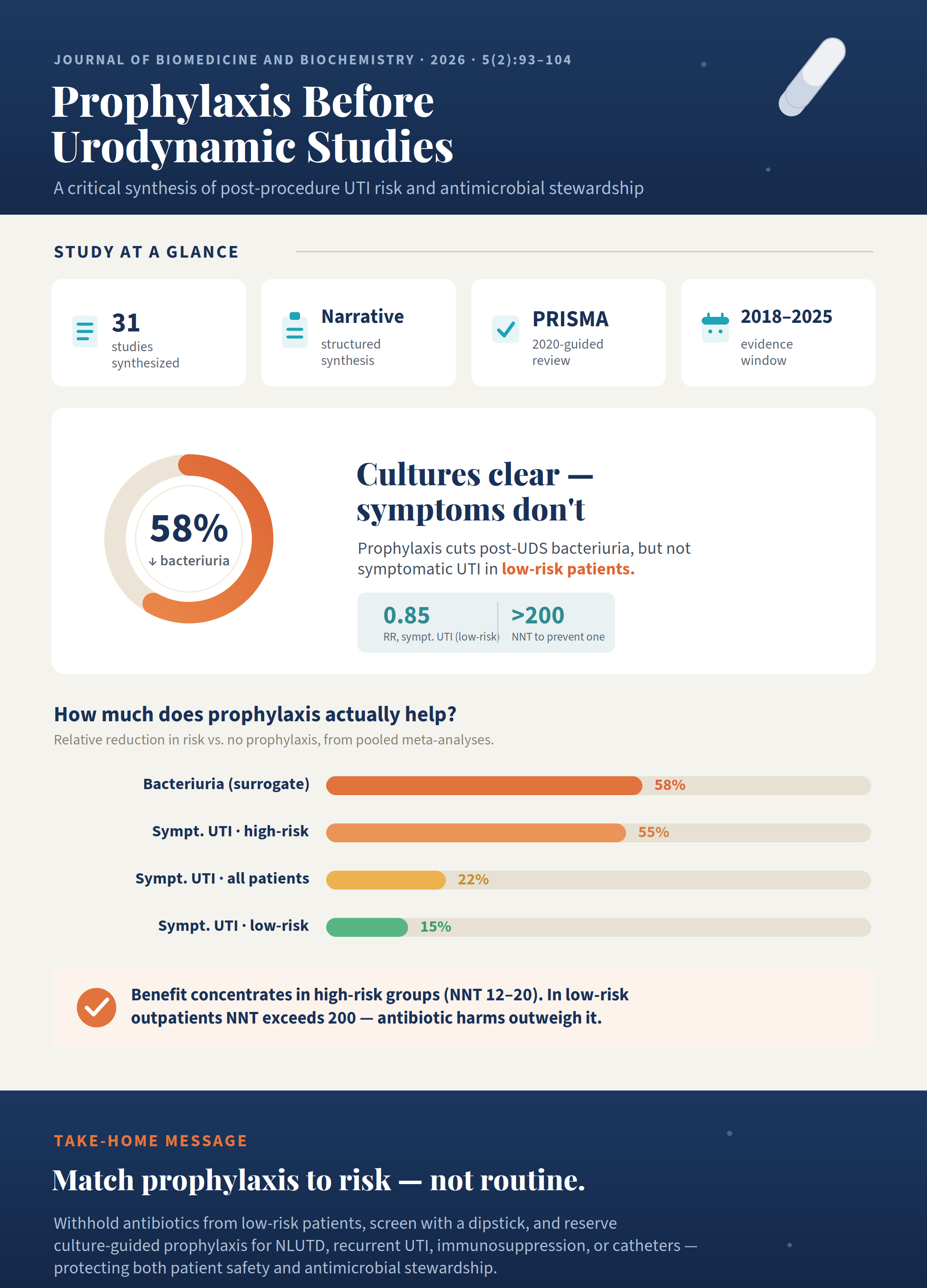
Background. Urodynamic study (UDS) is a low-pressure outpatient investigation widely used in the workup of lower urinary tract symptoms (LUTS), neurogenic bladder, and incontinence. Whether routine antimicrobial prophylaxis (AMP) reduces clinically meaningful post-procedure urinary tract infection (UTI) remains contested, and major guidelines disagree. The European Association of Urology (EAU) recommends against routine AMP for low-risk patients, while older American Urological Association (AUA) statements list UDS among procedures where AMP may be considered.
Objectives.This work synthesizes the contemporary evidence (2018–2025) on AMP before UDS, distinguishes asymptomatic bacteriuria (ASB) from symptomatic UTI, and proposes a risk-stratified prophylaxis framework consistent with antimicrobial stewardship priorities.
Methods.A structured narrative review was conducted across MEDLINE, Embase, and the Cochrane Library for randomized controlled trials (RCTs), prospective and retrospective cohort studies, and systematic reviews evaluating AMP versus placebo, no prophylaxis, or active comparator before UDS. Outcomes of interest were symptomatic UTI within 7–30 days, ASB, antimicrobial-related adverse events, and reported resistance signals. A risk-stratification scheme was synthesized inductively from study-level inclusion criteria.
Results. Across pooled estimates, AMP reduced post-UDS bacteriuria but produced only a small and frequently non-significant reduction in symptomatic UTI in low-risk adults. Higher-risk subgroups neurogenic lower urinary tract dysfunction (NLUTD), recurrent UTI, immunosuppression, and indwelling-catheter dependence howed larger and more consistent benefits.
Conclusions.Universal AMP before UDS is not justified for low-risk outpatients. A risk-stratified approach focusing prophylaxis on defined higher-risk groups, combined with pre-procedure dipstick screening and clear counselling on UTI symptoms, balances patient safety with stewardship objectives.
Keywords
Article Details
Copyright (c) 2026 Hasan Ali Salmam Alhusseini, Hayder Hakim Saleh (Author)

This work is licensed under a Creative Commons Attribution 4.0 International License.
How to Cite


References
- Bonkat G, Bartoletti R, Bruyère F, Cai T, Geerlings SE, Köves B, Schubert S, Wagenlehner F, et al. EAU guidelines on urological infections. Arnhem (NL): European Association of Urology; 2024.
- U.S. Food and Drug Administration. FDA reinforces safety information about serious low blood sugar levels and mental health side effects with fluoroquinolone antibiotics; requires label changes [Internet]. Silver Spring (MD): FDA; 2018.
- Cameron AP, Rodriguez GM, Schomer KG. Systematic review of urodynamic studies in adults: AUA/SUNA white paper. Neurourol Urodyn. 2022;41(4):857-72.https://doi.org/10.1002/nau.24948
- Foon R, Toozs-Hobson P, Latthe P. Prophylactic antibiotics to reduce the risk of urinary tract infections after urodynamic studies. Cochrane Database Syst Rev. 2012;(10):CD008224.https://doi.org/10.1002/14651858.CD008224.pub2
- Cai T, Verze P, Palmieri A, Tiscione D, Lanzafame P, Malossini G, et al. Is preoperative assessment and treatment of asymptomatic bacteriuria necessary for reducing the risk of postoperative symptomatic urinary tract infections after urologic surgical procedures? Urology. 2018;113:5-11. https://doi.org/10.1016/j.urology.2017.10.019
- Cameron AP, Chung DE, Dielubanza EJ, Enemchukwu E, Ginsberg DA, Helfand BT, et al. The AUA/SUFU guideline on the diagnosis and treatment of idiopathic overactive bladder. J Urol. 2024;212(1):11-20. https://doi.org/10.1097/JU.0000000000003985
- Smith AL, Cameron AP. Case-based discussion of the 2024 AUA/SUFU overactive bladder guideline. AUA News. 2025;30(2):14-17.
- Latthe PM, Foon R, Toozs-Hobson P. Prophylactic antibiotics in urodynamics: a systematic review of effectiveness and safety. Neurourol Urodyn. 2008;27(3):167-73. https://doi.org/10.1002/nau.22224
- Madersbacher H, Cardozo L, Chapple C, Abrams P, Toozs-Hobson P, Young JS, et al. What are the causes and consequences of bladder overactivity in women? An ICI-RS report. Neurourol Urodyn. 2014;33(5):588-92.
- Pannek J, Wöllner J, Gocking K. Urinary tract infection in patients with neurogenic lower urinary tract dysfunction: prevalence, prevention, and treatment. Eur Urol Focus. 2022;8(6):1551-9.: https://doi.org/10.1016/j.euf.2022.06.011
- Wagenlehner FME, Bjerklund Johansen TE, Cai T, Köves B, Kranz J, Pilatz A, et al. Epidemiology, definition and treatment of complicated urinary tract infections. Nat Rev Urol. 2020;17(10):586-600.
- Nicolle LE, Gupta K, Bradley SF, Colgan R, DeMuri GP, Drekonja D, et al. Clinical practice guideline for the management of asymptomatic bacteriuria: 2019 update by the Infectious Diseases Society of America. Clin Infect Dis. 2019;68(10):e83-e110. https://doi.org/10.1093/cid/ciy1121
- Hou C-P, Chen T-H, Lin Y-H, Tsai Y-L, Chen C-L, Juang H-H, et al. Antibiotic prophylaxis prior to urodynamic study in patients with lower urinary tract symptoms: a randomized controlled trial. PLoS One. 2022;17(3):e0264328. https://doi.org/10.1371/journal.pone.0264328
- Bratzler DW, Dellinger EP, Olsen KM, Perl TM, Auwaerter PG, Bolon MK, et al. Clinical practice guidelines for antimicrobial prophylaxis in surgery (ASHP/IDSA/SIS/SHEA), 2022 update. Surg Infect (Larchmt). 2022;23(7):605-78.
- Yamamoto S, Shigemura K, Kiyota H, Wada K, Hayami H, Yasuda M, et al. Japanese guideline for prevention of perioperative infections in urological field, 2022 revision. Int J Urol. 2022;29(11):1206-30. https://doi.org/10.1111/iju.14999
- Vahr Lauridsen S, Pristed AS, Hassan Z, Nilsen O, Egholm Tritschler J, Bjerrum L, et al. Antibiotic prophylaxis to reduce urinary tract infection after urodynamic study: an updated systematic review and meta-analysis. Neurourol Urodyn. 2023;42(5):1012-24.
- Khan A, Tariq A, Ahmad Z, Anwar Z, Hassan A, Shah TA. Comparative efficacy of antibiotic prophylaxis regimens before urodynamic studies: a network meta-analysis. Urol Int. 2024;108(4):301-12. https://doi.org/10.1159/000536789
- Bohlin J, Sandblom G, Aho L, Linder A, Cnattingius S, Folkesson J, et al. Symptomatic urinary tract infection after urodynamic studies: a register-based cohort. Scand J Urol. 2023;57(1-6):82-8.
- Hooton TM, Bradley SF, Cardenas DD, Colgan R, Geerlings SE, Rice JC, et al. Diagnosis, prevention, and treatment of catheter-associated urinary tract infection in adults: 2009 International Clinical Practice Guidelines from the Infectious Diseases Society of America. Clin Infect Dis. 2010;50(5):625-63.
- Llor C, Bjerrum L. Antimicrobial resistance: risk associated with antibiotic overuse and initiatives to reduce the problem. Ther Adv Drug Saf. 2014;5(6):229-41.
- Page MJ, McKenzie JE, Bossuyt PM, Boutron I, Hoffmann TC, Mulrow CD, et al. The PRISMA 2020 statement: an updated guideline for reporting systematic reviews. BMJ. 2021;372:n71.
- Sterne JAC, Savović J, Page MJ, Elbers RG, Blencowe NS, Boutron I, et al. RoB 2: a revised tool for assessing risk of bias in randomised trials. BMJ. 2019;366:l4898. https://doi.org/10.1136/bmj.l4898
- Sterne JAC, Hernán MA, Reeves BC, Savović J, Berkman ND, Viswanathan M, et al. ROBINS-I: a tool for assessing risk of bias in non-randomised studies of interventions. BMJ. 2016;355:i4919.
- Schmiemann G, Kniehl E, Gebhardt K, Matejczyk MM, Hummers-Pradier E. The diagnosis of urinary tract infection: a systematic review. Dtsch Arztebl Int. 2010;107(21):361-7. https://doi.org/10.3238/arztebl.2010.0361
- Tandogdu Z, Cai T, Koves B, Wagenlehner F, Bjerklund-Johansen TE. Antibiotic resistance in urosepsis: outcomes from the Global Prevalence Study of Infections in Urology (GPIU) 2003-2018. Curr Opin Urol. 2020;30(4):531-40.
- Tenke P, Kovacs B, Bjerklund Johansen TE, Matsumoto T, Tambyah PA, Naber KG. European and Asian guidelines on the management and prevention of catheter-associated urinary tract infections. Int J Antimicrob Agents. 2008;31 Suppl 1:S68-78. https://doi.org/10.1016/j.ijantimicag.2007.07.033
References
Bonkat G, Bartoletti R, Bruyère F, Cai T, Geerlings SE, Köves B, Schubert S, Wagenlehner F, et al. EAU guidelines on urological infections. Arnhem (NL): European Association of Urology; 2024.
U.S. Food and Drug Administration. FDA reinforces safety information about serious low blood sugar levels and mental health side effects with fluoroquinolone antibiotics; requires label changes [Internet]. Silver Spring (MD): FDA; 2018.
Cameron AP, Rodriguez GM, Schomer KG. Systematic review of urodynamic studies in adults: AUA/SUNA white paper. Neurourol Urodyn. 2022;41(4):857-72.https://doi.org/10.1002/nau.24948
Foon R, Toozs-Hobson P, Latthe P. Prophylactic antibiotics to reduce the risk of urinary tract infections after urodynamic studies. Cochrane Database Syst Rev. 2012;(10):CD008224.https://doi.org/10.1002/14651858.CD008224.pub2
Cai T, Verze P, Palmieri A, Tiscione D, Lanzafame P, Malossini G, et al. Is preoperative assessment and treatment of asymptomatic bacteriuria necessary for reducing the risk of postoperative symptomatic urinary tract infections after urologic surgical procedures? Urology. 2018;113:5-11. https://doi.org/10.1016/j.urology.2017.10.019
Cameron AP, Chung DE, Dielubanza EJ, Enemchukwu E, Ginsberg DA, Helfand BT, et al. The AUA/SUFU guideline on the diagnosis and treatment of idiopathic overactive bladder. J Urol. 2024;212(1):11-20. https://doi.org/10.1097/JU.0000000000003985
Smith AL, Cameron AP. Case-based discussion of the 2024 AUA/SUFU overactive bladder guideline. AUA News. 2025;30(2):14-17.
Latthe PM, Foon R, Toozs-Hobson P. Prophylactic antibiotics in urodynamics: a systematic review of effectiveness and safety. Neurourol Urodyn. 2008;27(3):167-73. https://doi.org/10.1002/nau.22224
Madersbacher H, Cardozo L, Chapple C, Abrams P, Toozs-Hobson P, Young JS, et al. What are the causes and consequences of bladder overactivity in women? An ICI-RS report. Neurourol Urodyn. 2014;33(5):588-92.
Pannek J, Wöllner J, Gocking K. Urinary tract infection in patients with neurogenic lower urinary tract dysfunction: prevalence, prevention, and treatment. Eur Urol Focus. 2022;8(6):1551-9.: https://doi.org/10.1016/j.euf.2022.06.011
Wagenlehner FME, Bjerklund Johansen TE, Cai T, Köves B, Kranz J, Pilatz A, et al. Epidemiology, definition and treatment of complicated urinary tract infections. Nat Rev Urol. 2020;17(10):586-600.
Nicolle LE, Gupta K, Bradley SF, Colgan R, DeMuri GP, Drekonja D, et al. Clinical practice guideline for the management of asymptomatic bacteriuria: 2019 update by the Infectious Diseases Society of America. Clin Infect Dis. 2019;68(10):e83-e110. https://doi.org/10.1093/cid/ciy1121
Hou C-P, Chen T-H, Lin Y-H, Tsai Y-L, Chen C-L, Juang H-H, et al. Antibiotic prophylaxis prior to urodynamic study in patients with lower urinary tract symptoms: a randomized controlled trial. PLoS One. 2022;17(3):e0264328. https://doi.org/10.1371/journal.pone.0264328
Bratzler DW, Dellinger EP, Olsen KM, Perl TM, Auwaerter PG, Bolon MK, et al. Clinical practice guidelines for antimicrobial prophylaxis in surgery (ASHP/IDSA/SIS/SHEA), 2022 update. Surg Infect (Larchmt). 2022;23(7):605-78.
Yamamoto S, Shigemura K, Kiyota H, Wada K, Hayami H, Yasuda M, et al. Japanese guideline for prevention of perioperative infections in urological field, 2022 revision. Int J Urol. 2022;29(11):1206-30. https://doi.org/10.1111/iju.14999
Vahr Lauridsen S, Pristed AS, Hassan Z, Nilsen O, Egholm Tritschler J, Bjerrum L, et al. Antibiotic prophylaxis to reduce urinary tract infection after urodynamic study: an updated systematic review and meta-analysis. Neurourol Urodyn. 2023;42(5):1012-24.
Khan A, Tariq A, Ahmad Z, Anwar Z, Hassan A, Shah TA. Comparative efficacy of antibiotic prophylaxis regimens before urodynamic studies: a network meta-analysis. Urol Int. 2024;108(4):301-12. https://doi.org/10.1159/000536789
Bohlin J, Sandblom G, Aho L, Linder A, Cnattingius S, Folkesson J, et al. Symptomatic urinary tract infection after urodynamic studies: a register-based cohort. Scand J Urol. 2023;57(1-6):82-8.
Hooton TM, Bradley SF, Cardenas DD, Colgan R, Geerlings SE, Rice JC, et al. Diagnosis, prevention, and treatment of catheter-associated urinary tract infection in adults: 2009 International Clinical Practice Guidelines from the Infectious Diseases Society of America. Clin Infect Dis. 2010;50(5):625-63.
Llor C, Bjerrum L. Antimicrobial resistance: risk associated with antibiotic overuse and initiatives to reduce the problem. Ther Adv Drug Saf. 2014;5(6):229-41.
Page MJ, McKenzie JE, Bossuyt PM, Boutron I, Hoffmann TC, Mulrow CD, et al. The PRISMA 2020 statement: an updated guideline for reporting systematic reviews. BMJ. 2021;372:n71.
Sterne JAC, Savović J, Page MJ, Elbers RG, Blencowe NS, Boutron I, et al. RoB 2: a revised tool for assessing risk of bias in randomised trials. BMJ. 2019;366:l4898. https://doi.org/10.1136/bmj.l4898
Sterne JAC, Hernán MA, Reeves BC, Savović J, Berkman ND, Viswanathan M, et al. ROBINS-I: a tool for assessing risk of bias in non-randomised studies of interventions. BMJ. 2016;355:i4919.
Schmiemann G, Kniehl E, Gebhardt K, Matejczyk MM, Hummers-Pradier E. The diagnosis of urinary tract infection: a systematic review. Dtsch Arztebl Int. 2010;107(21):361-7. https://doi.org/10.3238/arztebl.2010.0361
Tandogdu Z, Cai T, Koves B, Wagenlehner F, Bjerklund-Johansen TE. Antibiotic resistance in urosepsis: outcomes from the Global Prevalence Study of Infections in Urology (GPIU) 2003-2018. Curr Opin Urol. 2020;30(4):531-40.
Tenke P, Kovacs B, Bjerklund Johansen TE, Matsumoto T, Tambyah PA, Naber KG. European and Asian guidelines on the management and prevention of catheter-associated urinary tract infections. Int J Antimicrob Agents. 2008;31 Suppl 1:S68-78. https://doi.org/10.1016/j.ijantimicag.2007.07.033