

Article Sidebar
Main Article Content
Abstract
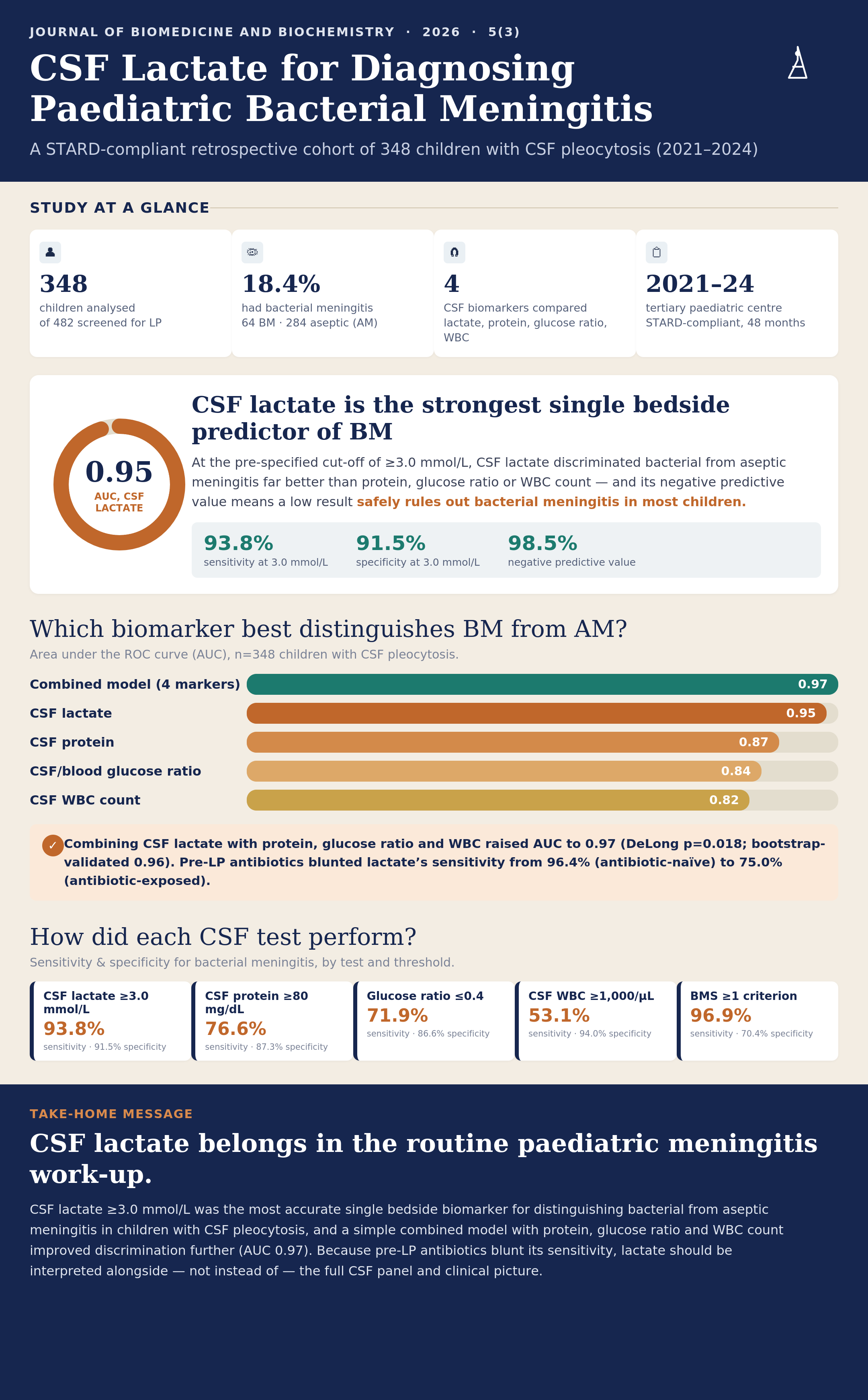
Background. Distinguishing bacterial meningitis (BM) from aseptic meningitis (AM) in children with cerebrospinal fluid (CSF) pleocytosis remains a frequent clinical challenge in low-prevalence emergency settings. The conventional CSF panel (white-cell count [WBC], protein, CSF-to-blood glucose ratio) and prediction rules such as the Bacterial Meningitis Score (BMS) reduce, but do not eliminate, unnecessary admission and empirical antibiotic exposure. CSF lactate is generated by bacterial anaerobic metabolism, is independent of serum lactate, and is reported in adult meta-analysis to have pooled sensitivity of 0.93 and specificity of 0.96; locally calibrated paediatric data are needed.
Objective. To determine the diagnostic accuracy of CSF lactate, CSF protein, CSF-to-blood glucose ratio, and CSF WBC count, alone and in combination, for discriminating BM from AM in children aged 1 month to 16 years presenting with CSF pleocytosis, against the reference standard of CSF culture or molecular bacterial detection with clinical adjudication.
Patients and methods. A retrospective single-centre diagnostic-accuracy cohort study was conducted at [Tertiary Hospital] from January 2021 through December 2024 and reported in accordance with the Standards for Reporting of Diagnostic Accuracy Studies (STARD) 2015 statement. Children with a clinically indicated lumbar puncture, complete biomarker panel, and CSF pleocytosis were included. Sensitivity, specificity, and the area under the receiver operating characteristic curve (AUC) of each biomarker and of a combined logistic model were calculated.
Results. Of 482 children screened, 348 with CSF pleocytosis formed the analytic cohort; 64 (18.4%) had BM. CSF lactate ≥ 3.0 mmol/L achieved a sensitivity of 93.8% (95% CI 84.7–98.4%) and specificity of 91.5% (87.6–94.4%); AUC 0.95 (0.92–0.98). A combined logistic model (CSF lactate, protein, glucose ratio, and WBC) reached an AUC of 0.97 (0.95–0.99).
Conclusions. CSF lactate ≥ 3.0 mmol/L was the most accurate single biomarker for paediatric BM and substantially improved a clinician-recognizable panel when combined with conventional CSF indices, supporting its routine measurement in centres evaluating children with CSF pleocytosis.
Keywords
Article Details
Copyright (c) 2026 Amjed Hassan Sahib* (Author)

This work is licensed under a Creative Commons Attribution 4.0 International License.
How to Cite


References
- GBD 2019 Meningitis Antimicrobial Resistance Collaborators. Global, regional, and national burden of meningitis and its aetiologies, 1990–2019: a systematic analysis for the Global Burden of Disease Study 2019. Lancet Neurol. 2023;22(8):685–711. https://doi.org/10.1016/S1474-4422(23)00195-3.
- Van de Beek D, Brouwer M, Hasbun R, Koedel U, Whitney CG, Wijdicks E. Community-acquired bacterial meningitis. Nat Rev Dis Primers. 2016;2:16074. https://doi.org/10.1038/nrdp.2016.74.
- Logan SAE, MacMahon E. Viral meningitis. BMJ. 2008;336(7634):36–40. https://doi.org/10.1136/bmj.39409.673657.AE.
- Brouwer MC, Tunkel AR, van de Beek D. Epidemiology, diagnosis, and antimicrobial treatment of acute bacterial meningitis. Clin Microbiol Rev. 2010;23(3):467–492. https://doi.org/10.1128/CMR.00070-09.
- Nigrovic LE, Kuppermann N, Malley R. Development and validation of a multivariable predictive model to distinguish bacterial from aseptic meningitis in children in the post-Haemophilus influenzae era. Pediatrics. 2002;110(4):712–719. https://doi.org/10.1542/peds.110.4.712.
- Nigrovic LE, Kuppermann N, Macias CG, Cannavino CR, Moro-Sutherland DM, Schremmer RD, et al. Clinical prediction rule for identifying children with cerebrospinal fluid pleocytosis at very low risk of bacterial meningitis. JAMA. 2007;297(1):52–60. https://doi.org/10.1001/jama.297.1.52.
- Nigrovic LE, Malley R, Kuppermann N. Meta-analysis of bacterial meningitis score validation studies. Arch Dis Child. 2012;97(9):799–805. https://doi.org/10.1136/archdischild-2012-301798.
- Sakushima K, Hayashino Y, Kawaguchi T, Jackson JL, Fukuhara S. Diagnostic accuracy of cerebrospinal fluid lactate for differentiating bacterial meningitis from aseptic meningitis: a meta-analysis. J Infect. 2011;62(4):255–262. https://doi.org/10.1016/j.jinf.2011.02.010.
- Mekitarian Filho E, Horita SM, Gilio AE, Nigrovic LE. Cerebrospinal fluid lactate level as a diagnostic biomarker for bacterial meningitis in children. Int J Emerg Med. 2014;7:14. https://doi.org/10.1186/1865-1380-7-14.
- Bossuyt PM, Reitsma JB, Bruns DE, Gatsonis CA, Glasziou PP, Irwig L, et al. STARD 2015: an updated list of essential items for reporting diagnostic accuracy studies. BMJ. 2015;351:h5527. https://doi.org/10.1136/bmj.h5527.
- Thomson J, Sucharew H, Cruz AT, Nigrovic LE, Freedman SB, Garro AC, et al. Cerebrospinal fluid reference values for young infants undergoing lumbar puncture. Pediatrics. 2018;141(3):e20173405. https://doi.org/10.1542/peds.2017-3405.
- DeLong ER, DeLong DM, Clarke-Pearson DL. Comparing the areas under two or more correlated receiver operating characteristic curves: a nonparametric approach. Biometrics. 1988;44(3):837–845. https://doi.org/10.2307/2531595.
- Nasir H, Afzal MF, Hamid MH, Laeeq A. Diagnostic accuracy of cerebrospinal fluid lactate in confirmed cases of acute bacterial meningitis in children. Pak J Med Sci. 2020;36(7):1558–1561. https://doi.org/10.12669/pjms.36.7.1682.
- Groeneveld NS, Bijlsma MW, van Zeggeren IE, Staal SL, Tanck MWT, van de Beek D, et al. Diagnostic prediction models for bacterial meningitis in children with a suspected central nervous system infection: a systematic review and prospective validation study. BMJ Open. 2024;14(8):e081172. https://doi.org/10.1136/bmjopen-2023-081172.
- Olie SE, Staal SL, Groeneveld NS, Schotman HHM, Bodilsen J, Nielsen H, et al. Validation and clinical implementation of cerebrospinal fluid C-reactive protein for the diagnosis of bacterial meningitis: a prospective diagnostic accuracy study. Lancet Reg Health Eur. 2025;53:101309. https://doi.org/10.1016/j.lanepe.2025.101309.
- Luo T, Yang S, Chen Y, Liu S, Yang L, Hu N, et al. Quantitative proteomic analysis of cerebrospinal fluid reveals CD163, A2M and full-length APP as potential diagnostic biomarkers of paediatric bacterial meningitis. Proteome Sci. 2022;20(1):8. https://doi.org/10.1186/s12953-022-00191-5.
- Tunkel AR, Hartman BJ, Kaplan SL, Kaufman BA, Roos KL, Scheld WM, et al. Practice guidelines for the management of bacterial meningitis. Clin Infect Dis. 2004;39(9):1267–1284. https://doi.org/10.1086/425368.
- Van de Beek D, Cabellos C, Dzupova O, Esposito S, Klein M, Kloek AT, et al. ESCMID guideline: diagnosis and treatment of acute bacterial meningitis. Clin Microbiol Infect. 2016;22 Suppl 3:S37–S62. https://doi.org/10.1016/j.cmi.2016.01.007.
- Dubos F, Korczowski B, Aygun DA, Martinot A, Prat C, Galetto-Lacour A, et al. Distinguishing between bacterial and aseptic meningitis in children: European comparison of two clinical decision rules. Arch Dis Child. 2010;95(12):963–967. https://doi.org/10.1136/adc.2010.186056.
- Khoury NT, Hossain MM, Wootton SH, Salazar L, Hasbun R. Meningitis with a negative cerebrospinal fluid Gram stain in adults: risk classification for an adverse clinical outcome. Mayo Clin Proc. 2012;87(12):1181–1188. https://doi.org/10.1016/j.mayocp.2012.08.016.
- Kestenbaum LA, Ebberson J, Zorc JJ, Hodinka RL, Shah SS. Defining cerebrospinal fluid white blood cell count reference values in neonates and young infants. Pediatrics. 2010;125(2):257–264. https://doi.org/10.1542/peds.2009-1181.
- Huy NT, Thao NT, Diep DT, Kikuchi M, Zamora J, Hirayama K. Cerebrospinal fluid lactate concentration to distinguish bacterial from aseptic meningitis: a systemic review and meta-analysis. Crit Care. 2010;14(6):R240. https://doi.org/10.1186/cc9395.
References
GBD 2019 Meningitis Antimicrobial Resistance Collaborators. Global, regional, and national burden of meningitis and its aetiologies, 1990–2019: a systematic analysis for the Global Burden of Disease Study 2019. Lancet Neurol. 2023;22(8):685–711. https://doi.org/10.1016/S1474-4422(23)00195-3.
Van de Beek D, Brouwer M, Hasbun R, Koedel U, Whitney CG, Wijdicks E. Community-acquired bacterial meningitis. Nat Rev Dis Primers. 2016;2:16074. https://doi.org/10.1038/nrdp.2016.74.
Logan SAE, MacMahon E. Viral meningitis. BMJ. 2008;336(7634):36–40. https://doi.org/10.1136/bmj.39409.673657.AE.
Brouwer MC, Tunkel AR, van de Beek D. Epidemiology, diagnosis, and antimicrobial treatment of acute bacterial meningitis. Clin Microbiol Rev. 2010;23(3):467–492. https://doi.org/10.1128/CMR.00070-09.
Nigrovic LE, Kuppermann N, Malley R. Development and validation of a multivariable predictive model to distinguish bacterial from aseptic meningitis in children in the post-Haemophilus influenzae era. Pediatrics. 2002;110(4):712–719. https://doi.org/10.1542/peds.110.4.712.
Nigrovic LE, Kuppermann N, Macias CG, Cannavino CR, Moro-Sutherland DM, Schremmer RD, et al. Clinical prediction rule for identifying children with cerebrospinal fluid pleocytosis at very low risk of bacterial meningitis. JAMA. 2007;297(1):52–60. https://doi.org/10.1001/jama.297.1.52.
Nigrovic LE, Malley R, Kuppermann N. Meta-analysis of bacterial meningitis score validation studies. Arch Dis Child. 2012;97(9):799–805. https://doi.org/10.1136/archdischild-2012-301798.
Sakushima K, Hayashino Y, Kawaguchi T, Jackson JL, Fukuhara S. Diagnostic accuracy of cerebrospinal fluid lactate for differentiating bacterial meningitis from aseptic meningitis: a meta-analysis. J Infect. 2011;62(4):255–262. https://doi.org/10.1016/j.jinf.2011.02.010.
Mekitarian Filho E, Horita SM, Gilio AE, Nigrovic LE. Cerebrospinal fluid lactate level as a diagnostic biomarker for bacterial meningitis in children. Int J Emerg Med. 2014;7:14. https://doi.org/10.1186/1865-1380-7-14.
Bossuyt PM, Reitsma JB, Bruns DE, Gatsonis CA, Glasziou PP, Irwig L, et al. STARD 2015: an updated list of essential items for reporting diagnostic accuracy studies. BMJ. 2015;351:h5527. https://doi.org/10.1136/bmj.h5527.
Thomson J, Sucharew H, Cruz AT, Nigrovic LE, Freedman SB, Garro AC, et al. Cerebrospinal fluid reference values for young infants undergoing lumbar puncture. Pediatrics. 2018;141(3):e20173405. https://doi.org/10.1542/peds.2017-3405.
DeLong ER, DeLong DM, Clarke-Pearson DL. Comparing the areas under two or more correlated receiver operating characteristic curves: a nonparametric approach. Biometrics. 1988;44(3):837–845. https://doi.org/10.2307/2531595.
Nasir H, Afzal MF, Hamid MH, Laeeq A. Diagnostic accuracy of cerebrospinal fluid lactate in confirmed cases of acute bacterial meningitis in children. Pak J Med Sci. 2020;36(7):1558–1561. https://doi.org/10.12669/pjms.36.7.1682.
Groeneveld NS, Bijlsma MW, van Zeggeren IE, Staal SL, Tanck MWT, van de Beek D, et al. Diagnostic prediction models for bacterial meningitis in children with a suspected central nervous system infection: a systematic review and prospective validation study. BMJ Open. 2024;14(8):e081172. https://doi.org/10.1136/bmjopen-2023-081172.
Olie SE, Staal SL, Groeneveld NS, Schotman HHM, Bodilsen J, Nielsen H, et al. Validation and clinical implementation of cerebrospinal fluid C-reactive protein for the diagnosis of bacterial meningitis: a prospective diagnostic accuracy study. Lancet Reg Health Eur. 2025;53:101309. https://doi.org/10.1016/j.lanepe.2025.101309.
Luo T, Yang S, Chen Y, Liu S, Yang L, Hu N, et al. Quantitative proteomic analysis of cerebrospinal fluid reveals CD163, A2M and full-length APP as potential diagnostic biomarkers of paediatric bacterial meningitis. Proteome Sci. 2022;20(1):8. https://doi.org/10.1186/s12953-022-00191-5.
Tunkel AR, Hartman BJ, Kaplan SL, Kaufman BA, Roos KL, Scheld WM, et al. Practice guidelines for the management of bacterial meningitis. Clin Infect Dis. 2004;39(9):1267–1284. https://doi.org/10.1086/425368.
Van de Beek D, Cabellos C, Dzupova O, Esposito S, Klein M, Kloek AT, et al. ESCMID guideline: diagnosis and treatment of acute bacterial meningitis. Clin Microbiol Infect. 2016;22 Suppl 3:S37–S62. https://doi.org/10.1016/j.cmi.2016.01.007.
Dubos F, Korczowski B, Aygun DA, Martinot A, Prat C, Galetto-Lacour A, et al. Distinguishing between bacterial and aseptic meningitis in children: European comparison of two clinical decision rules. Arch Dis Child. 2010;95(12):963–967. https://doi.org/10.1136/adc.2010.186056.
Khoury NT, Hossain MM, Wootton SH, Salazar L, Hasbun R. Meningitis with a negative cerebrospinal fluid Gram stain in adults: risk classification for an adverse clinical outcome. Mayo Clin Proc. 2012;87(12):1181–1188. https://doi.org/10.1016/j.mayocp.2012.08.016.
Kestenbaum LA, Ebberson J, Zorc JJ, Hodinka RL, Shah SS. Defining cerebrospinal fluid white blood cell count reference values in neonates and young infants. Pediatrics. 2010;125(2):257–264. https://doi.org/10.1542/peds.2009-1181.
Huy NT, Thao NT, Diep DT, Kikuchi M, Zamora J, Hirayama K. Cerebrospinal fluid lactate concentration to distinguish bacterial from aseptic meningitis: a systemic review and meta-analysis. Crit Care. 2010;14(6):R240. https://doi.org/10.1186/cc9395.